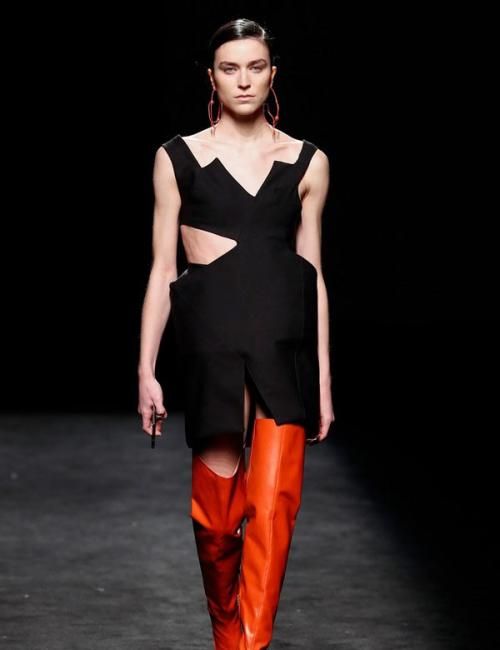




During London Fashion Week, Bullock Inclusion’s BIG Fashion Show offered a compelling vision of fashion’s future, placing accessibility, representation, technology and sustainability at the heart of design.
On 18 September 2026, St Mary’s Church, Marylebone, hosted Bullock Inclusion’s Future of Fashion Showcase. During London Fashion Week the event brought together designers, disabled and non-disabled models, students, brands, educators, technology leaders, community organisations and fashion professionals to explore inclusive design and the industry’s future. The message was clear, fashion must consider not only what looks good, but who can wear it, access it, see themselves represented in it and help create it.
At the centre was Samanta Bullock, CEO of Bullock Inclusion Global. A former number-one wheelchair tennis player from Brazil, Bullock won a silver medal in doubles at the 2007 ParaPan American Games. After becoming paraplegic at 14, she eventually returned to modelling through adaptive sport and developed a wider mission to transform fashion.
I have followed and supported Samanta since the early days of her fashion events, and it is wonderful to see her and her team continue to grow. Her fortitude, vision and ethos are inspiring. Bullock’s work is especially compelling because inclusion is treated not as an occasional theme or marketing exercise, but as essential to fashion’s future.
“Fashion has the power to change the way people see themselves and the way society sees them. We want BIG Fashion Show to be a place where people don’t just talk about inclusion, but actually experience it.
We want designers, brands, students and the audience to leave asking themselves one simple question:
Who are we designing for?”
Samanta Bullock , CEO, BULLOCK INCLUSION GLOBAL That philosophy shaped the BIG Fashion Show.
One of the evening’s most thought-provoking moments was ‘The Impact of Fashion’, a panel hosted by Victoria Jenkins, founder of Unhidden. The discussion connected fashion with confidence, belonging, representation, sustainability, emergency preparedness and technology. Joining Jenkins were Clara Holmes, content creator and wheelchair user; Sandra Harness of Zumba; Michal Rimon of Access Israel; Ross Barry of Reskinned; and Christopher Patnoe of Google. The Co-hosts of the evening were Suzanne Ellingham, the Event Director of Source Fashion and Bernie Yates, Knitwear Designer, Fashion / Textiles Lecturer, Knowledge Exchange Lead CSM , Contributing Editor Elle UK.
Rimon highlighted Access Israel’s Purple Vest programme, which trains volunteers to support and evacuate disabled and older people safely during emergencies and is expanding internationally. Barry discussed Reskinned’s circular-fashion model, while Patnoe explored technology’s potential to improve accessibility, including smart glasses.
The panel asked whether the industry is truly changing, whether fashion can be sustainable if people cannot comfortably access or use its products, and how technology can remove rather than create barriers. Ultimately, the central question was: Who are we designing for?
The catwalk featured ten designer and brand showcases, alongside the People’s Catwalk, presenting varied approaches to inclusive and adaptive fashion.
Opening the show were 18 fashion students from UDESC in Brazil, whose designs were developed in dialogue with their models. Balancing aesthetics with comfort, autonomy and function, their work demonstrated the importance of designing with the wearer.
Mi Moda Indígena Munduruku, presented by Amazonian women Rebeca Ferreira and Seanne Oliveira, brought Indigenous culture and knowledge to the runway through sustainable and socially inclusive fashion.
Reskinned continued the sustainability conversation with takeback, recommerce and end-of-life recycling services operating across more than 30 brands.
Technology entered the runway through Hope Tech’s Sixth Sense, a shoulder-worn navigation aid co-designed with blind and visually impaired people. Combining object detection with sound and haptic feedback, it showed how technology can support independence. Paralympic Champion Chris Hunt Skelley MBE walked the catwalk for Hope Tech at the Big Fashion Show. He wore designs by Paper Engineer and Educator Darryl Bedford along with the sixth sense wearable navigation device.
Artist Darryl Bedford of Vectoriseart presented Amplitude, an exploration of kirigami that transforms flat materials into sculptural forms capable of expanding around diverse bodies. The live transformations made the design process part of the performance.
At Caroline London, Carola Del Celo presented modular jumpsuits designed to adapt to women rather than requiring women to adapt to conventional garments. Interchangeable elements created options for wheelchair users, while smart glasses completed the futuristic look.
Intotum presented adaptive ready-to-wear for wheelchair users, ostomates and people with sensory sensitivities, alongside its children’s line, Intots. Practicality and fashion were given equal importance.
The collaboration between Neo Walk, Juno Bridal and Esh London brought glamour to mobility aids through handcrafted walking sticks, gowns designed for different genders, bodies and disabilities, and Edwardian-inspired jewellery. Its message was clear: mobility aids need not be hidden for an outfit to be beautiful.
UrbanFit Africa brought African heritage to the catwalk through its Arewa collection, combining the narratives of adire and asooke with contemporary fabrics and modern silhouettes.
Zumba closed the designer presentations with bold colour, innovative silhouettes and unexpected details. Their clothing range was designed around confidence and expression rather than conformity.
A defining element of the BIG Fashion Show was its investment in future designers. Through Bullock Inclusion’s education work, students and emerging designers are encouraged to move beyond traditional assumptions and consider disabled people’s experiences, needs and aspirations.
Inclusive design should not be a separate category at the edge of mainstream fashion. It is an opportunity to rethink clothing from the beginning, accounting for different bodies, sensory experiences, ways of moving and individual requirements as part of the creative process.
The BIG Fashion Show knows the next chapter need not sacrifice beauty, creativity or spectacle. Instead, it can expand who those things are for.
The BIG Fashion Show was more than another London Fashion Week event. It invited audiences to reconsider fashion’s foundations and recognise that its future will be more interesting when more people are included in designing it.
About Bullock Inclusion Global
Bullock Inclusion Global is a London-based organisation working to create greater inclusion, accessibility and representation through fashion, education, sport and community.
Through fashion shows, education programmes, inclusive design projects and community initiatives, Bullock Inclusion creates opportunities for disabled people to be seen, heard and involved in shaping the future.
The BIG Fashion Show forms part of that wider mission: using fashion to start conversations, challenge perceptions and create meaningful opportunities for change.
Samanta Bullock
CEO, Bullock Inclusion Global
Email: samantabullock@me.com
Phone: +44 7921 900760
Web: www.bullockinclusion.co.uk
Instagram: @biglobalofficial
by Kim Grahame
main photo by Ruth Virgo; Brand Udesd; Designer Rebecca Borre